
Design Field
Speculative Designs – What if…?
Timeline
7-week project
2015
Key Learning
Messaging precedes execution
A speculative exploration aimed to provoke audiences.
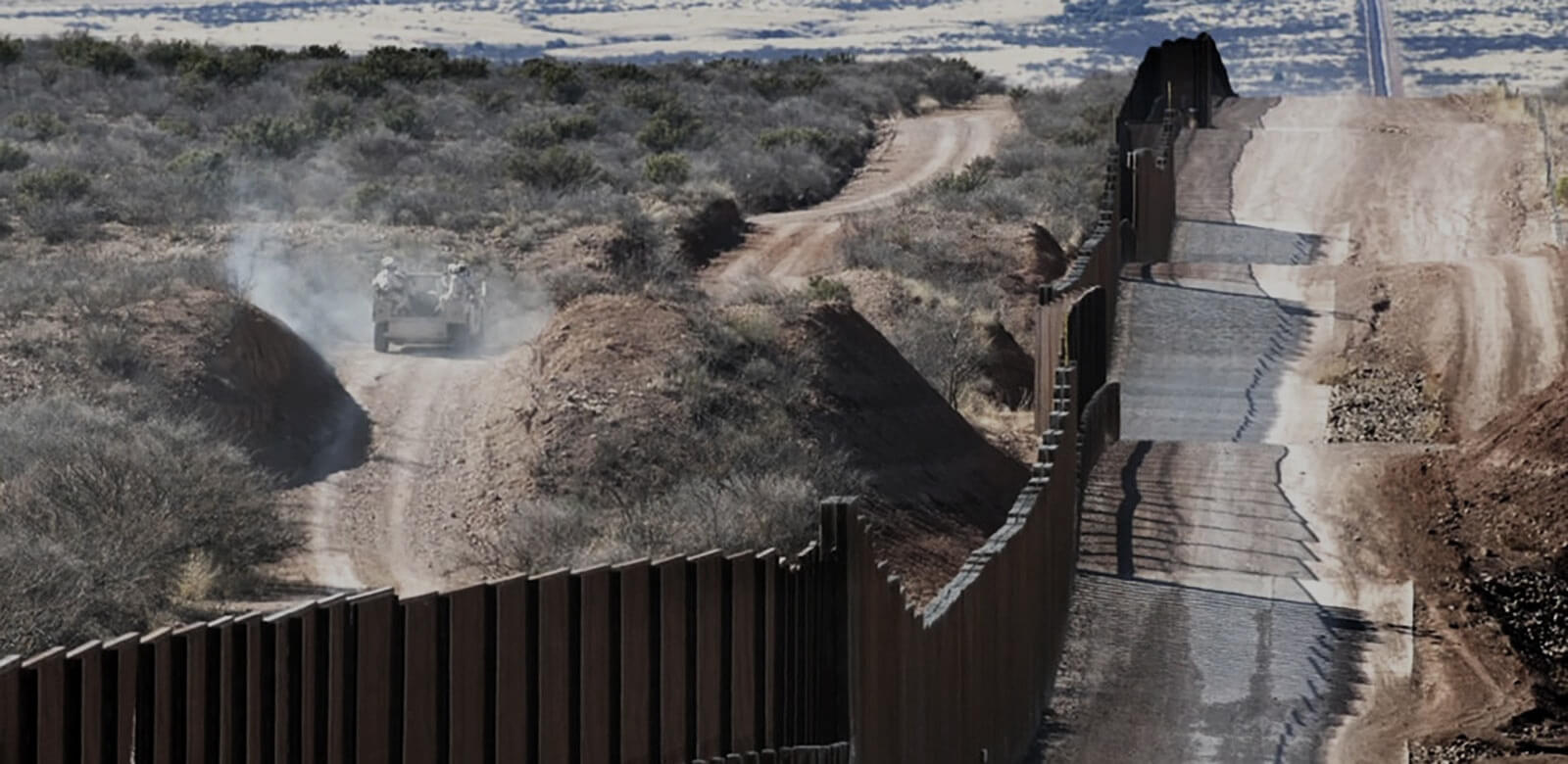
In a world increasingly shaped by climate change, millions will be forced to migrate. Yet current discourse rarely examines how discrimination and privilege will determine who gets to move to safety and who doesn’t.
Introduction
“Global Migration Market” (GMM) emerged from a provocative question: What happens when climate refugees face discrimination and socioeconomic barriers that exist today, but amplified by scarcity and fear?
This 7-week speculative design project challenged me to critique society’s behaviours, rather than try and improve humanity. My team and I created a black-market migration platform that forces users to confront uncomfortable truths about privilege, access, and survival. Visitors to the platform must disclose their personal details: “high quality” migrants get more privileges and lower risk than those who lack specific attributes.
My Role
I led the research into climate migration patterns and their connection to existing conflicts, developed the discriminatory system that forms the project’s foundation, designed the user journey through the black-market application process, and coded the prototype that simulates the platform’s decision-making criteria.
Finding the “Problem” to “Solve”
We were familiar with climate change consequences: rising sea levels, extreme weather, resource scarcity. The breakthrough came when I discovered that intense drought had helped exacerbate the Syrian Crisis. The focus on migrants and refugees appealed to us the most because climate change is rarely seen as a motivating factor for mass migration.
No one is saying ‘I’d better pack my stuff and go to Europe because I expect CO2 emissions to rise.’
Michael Werz, Center for American Progress
The Real Insight
As we dug deeper into climate migration, a more complex picture emerged. It became more about how existing inequalities determine who survives them.
There are several theories… When agricultural conditions worsen and people move to cities, pressure on urban resources creates tension. Another [theory] has to do with social and economic inequality… rainfall patterns could predict when landless farmers would invade wealthy landowners’ turf. Other theories look at individual psychology, and whether climatic shock may influence a person’s level of aggression or ability to make decisions.
Sydney Brownstone, Fast Company
It was fascinating to find that water shortages and straining of local resources could result in conflict and eventual migration, and that climate change had a part in it.
GMM: The Black Market Solution
Our research revealed that legal migration becomes heavily restricted during climate (and geopolitical) crises due to limited resources and local tensions. Fear clouds rational judgment, causing communities to restrict and profile people based on socioeconomic status. This creates a perfect storm for exploitation.
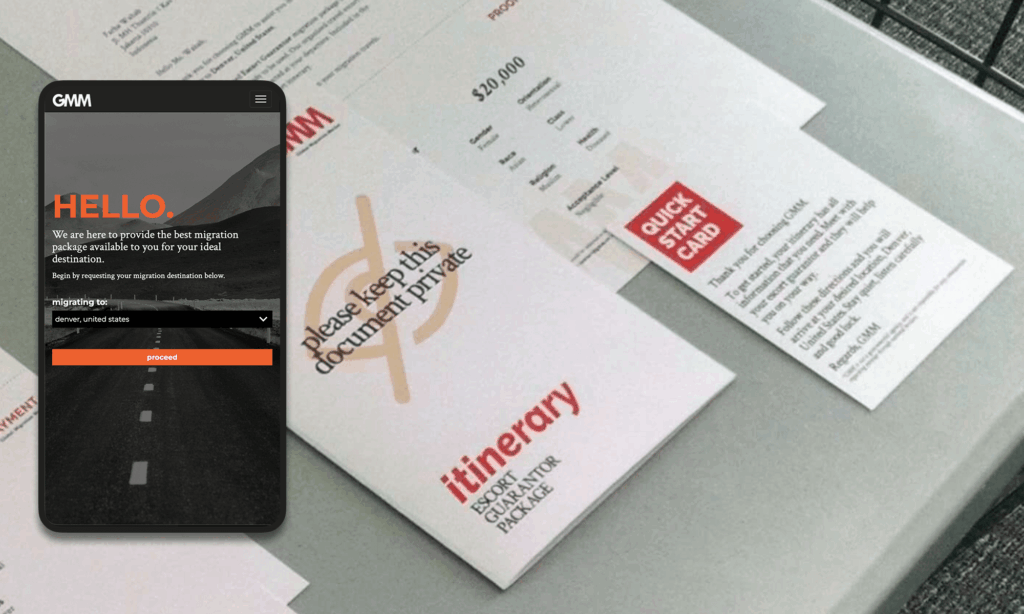
GMM presents itself as a black-market migration service that helps climate refugees escape to safer regions. The platform’s cold, corporate efficiency masks its discriminatory core. Migrants must disclose personal details for the system to determine their “migration eligibility.”
The Flow
Users select their destination from a map of climate-safe regions. The interface feels legitimate, like applying for a visa online. This normalcy is intentional. Discrimination often operates through seemingly neutral systems.
The questions start simple. Ethnicity, religion, economic status, education, family size. They feel routine until the algorithm reveals its purpose: sorting applicants into risk categories.
The options become brutal. “Appealing” migrants get low-risk options like forged documents and safe transport. “Questionable” applicants face smuggling and dangerous routes.
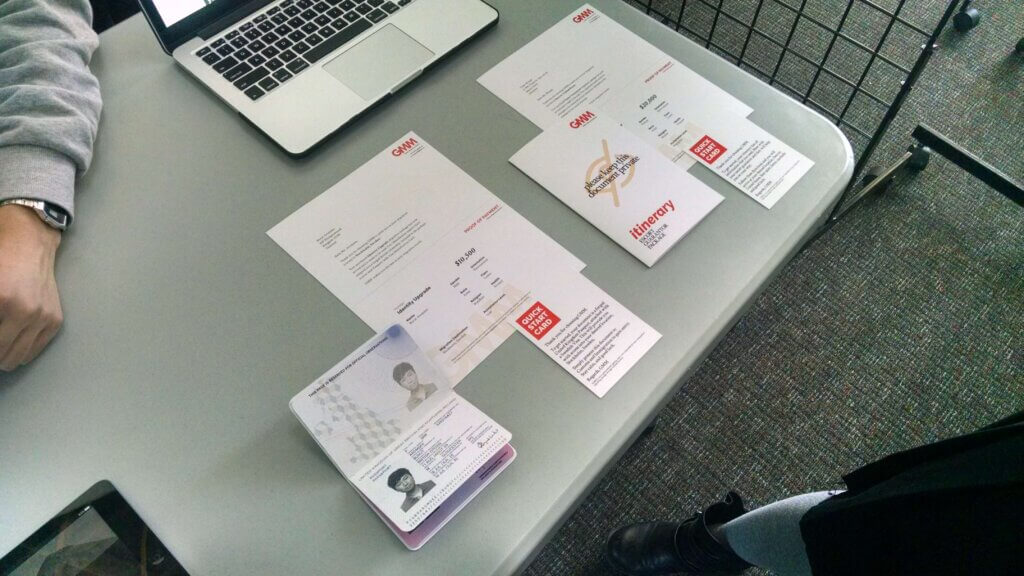
The system makes explicit what’s often hidden: privilege determines survival.
Challenges & Solutions
We struggled with focus early on, despite being able to address the climate refugee impact in a personal and immediate way. We explored survival kits, border agencies, and resource packages, but these felt like surface-level solutions rather than critical provocations.
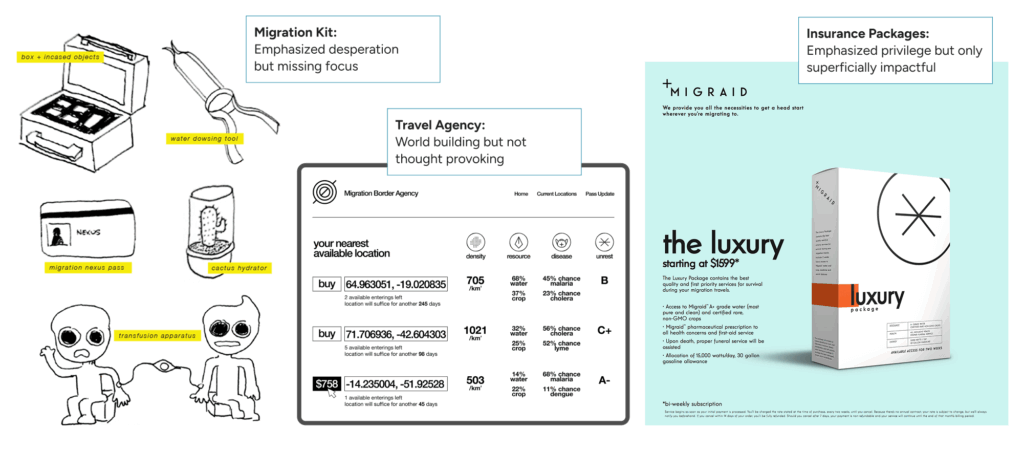
By critically reflecting on every iteration, we were able to finally focus on the opportunism that emerges during crisis.
Outcome
This experiment offered an exciting counterpoint to the “normal” use of design in a product and business sense, challenging me to think about how designs can intentionally or unintentionally send a message. In hindsight, our extended exploration phase ate into execution time. With more runway, we would have sharpened the contrast between socioeconomic classes in the exhibit experience and grounded our work in deeper research on realistic, possibly true, refugee experiences. We successfully shared our vision of a distressful future to visitors, and despite these constraints, the project pushed me to see design not just as a tool for solutions, but as a medium for provoking difficult questions.
Team
Valerie Cheng, Richard Hoang
Tools
HTML, CSS, Javascript, physical prototyping
Roles
UX design, frontend, research